
The Most Underestimated Variable in Medicine
What a 40% placebo response rate is actually trying to tell us

It seems like every week placebo is in my orbit. A trial failure because the placebo arm performed “unexpectedly well”. A strategic discussion about how to design around placebo response to actually measure drug effect. The challenge of drugs — oh and there are many! — that functionally unblind themselves: a change in urine color, a dry mouth, a perceptual shift that no participant could possibly mistake for nothing. Placebo is the variable that won’t stay in its lane.
I’ll be upfront about where I stand: I’m a believer in mindset as a powerful healer. Not woo (i.e. I’ve written about science meets woo). Not wishful thinking. Real, measurable biological change — driven by expectation, context, and the extraordinary machinery the brain deploys when it believes something is happening. The phenomenon we call placebo is probably not one thing. It’s likely a collection of mechanisms, a family of effects that we’ve collapsed under a single name because they share a common feature: no molecule we put there caused them.
That’s what makes placebo so fascinating and so deeply inconvenient, simultaneously awesome and infuriating. It is the brain healing itself — and we’ve spent decades trying to subtract it.
The number that should stop you cold
In clinical trials for major depressive disorder, placebo response rates typically run between 35 and 50 percent. Read that again. In trials designed to test whether a drug works, roughly four in ten people assigned to the “sugar pill” get significantly better. And the number has been climbing. A landmark 2002 paper in JAMA — titled, with unusual bluntness, “Placebo response in studies of major depression: variable, substantial, and growing” — documented the trend that the field has been grappling with ever since.
The practical consequence is stark. As placebo response rises, the gap between drug and placebo narrows. A drug that convincingly beat placebo in a 1990 trial might fail the identical trial today — not because the drug got weaker, but because the placebo got stronger. My colleagues Maurizio Fava and Diego Pizzagalli, along with Ted Kaptchuk at BIDMC — who has spent more of his career studying placebo than almost anyone alive — are co-authors on a paper I was part of that tries to get at the neurobiological underpinnings of exactly this problem. The challenge is real, it is growing, and it is not well understood.
This is not fake. It’s in the brain.
Before we go further, let’s be precise about what placebo response actually is — because “it’s all in your head” is both technically true and deeply misleading.
PET imaging studies have shown that placebo administration produces real dopamine release in the nucleus accumbens — the brain’s reward hub — in proportion to the expectation of improvement. This isn’t a patient exaggerating their symptoms. It’s measurable neurochemistry. The opioid system activates. Reward circuits fire. In Parkinson’s disease, placebo has been shown to produce genuine motor improvement alongside real dopamine release in the striatum. The brain, in other words, can generate its own pharmacology when it expects relief.
This connects to something I’ve written about before — the predictive brain (indeed your brain is lying to you!). The brain doesn’t passively register the world. It constantly generates predictions about what’s coming and updates them based on incoming signals. In that framework, placebo isn’t mysterious at all. It’s the brain’s prediction of improvement — “I took a treatment, therefore I should feel better” — generating a real biological cascade. The molecule confirms the prediction. The placebo is the prediction, running without the molecule.
It's a reminder for me that the boundary between mind (and/or brain) and body was always more porous than medicine liked to admit — something Bessel van der Kolk has spent a career documenting in a different but deeply related context. See the brilliant book: The Body Keeps Score.
Which means placebo response isn’t noise contaminating our signal. It’s the brain’s own therapeutic machinery, activated by context and expectation. And we’ve been designing trials to minimize it rather than understand it.
Why is the placebo getting stronger?
Short answer is, “I don’t know”. Several theories compete and they’re probably all partially right and mostly wrong.
The first is purely statistical: regression to the mean. People enter trials at their worst, and some proportion would have improved regardless of treatment. As trial enrollment has expanded and inclusion criteria broadened, more people who were going to naturally improve are ending up in placebo arms.
The second is the therapeutic ritual effect. Participants in clinical trials receive something that most patients in regular care do not: close monitoring, frequent visits, attentive clinicians, the sense that someone is watching and that their improvement matters. Ted Kaptchuk’s work has shown that the ritual of receiving care — the white coat, the careful attention, the act of being treated — is itself biologically active. The placebo arm in a well-run trial is not actually receiving nothing. It’s receiving a highly optimized therapeutic encounter.
The third, and to me the most interesting, is the information environment. Patients now arrive at clinical trials shaped by decades of direct-to-consumer pharmaceutical advertising, health media, online patient communities, and a broader cultural narrative that treatment works. Expectation is primed before they walk through the door. When someone enrolls in a depression trial in 2025, they bring with them an accumulated belief — biological in its expression — that taking a pill as part of a clinical trial is associated with getting better. That belief is not inert.
The double-blind is kind of a fiction for psychoactive drugs
Here is where I want to be direct about something the field discusses quietly but rarely says plainly: for most psychoactive drugs, the double-blind trial is not actually blind.
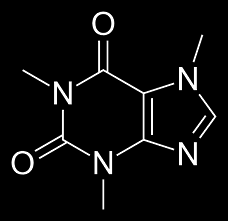
Consider caffeine — a common, pschoactive drug. If I gave you a capsule and told you it might be caffeine or placebo, could you tell? Of course you could — within twenty minutes. The alertness, the slight elevation in heart rate, the familiar feeling of the molecule doing what it does. Now extend that logic to antidepressants with distinctive brain activity and side effects — dry mouth, weight changes, sexual dysfunction. To opioids... (good luck masking those!) To ketamine… (clearly not placebo here!) To psychedelics, where the subjective experience is so profound that essentially no participant is genuinely uncertain about their assignment even with “active comparators”.
This matters tremendously. When a participant knows — or strongly suspects — they’re on the active drug, their expectations shift accordingly. And when a participant suspects they’re on placebo, their expectations shift the other way. You are no longer measuring drug versus placebo. You are measuring drug-plus-heightened-expectation versus placebo-plus-dampened-expectation. The effect size you report is a blend of pharmacology and psychology that you cannot cleanly separate.
A striking example from outside psychiatry: TauRx’s LMTM, a methylene blue derivative tested in Alzheimer’s disease, colors urine greenish-blue. The solution to maintain blinding was to give the placebo arm a low dose of the active compound — just enough to produce the same urine color, but presumably too low to have a biological effect. This is ingenious and heroic trial design. It is also, in retrospect, revealing: the “inactive” placebo dose later showed signs of possible biological activity, which threw the entire interpretation of the trial into question. When you have to give your placebo arm a dose of the drug to maintain the fiction of blinding, you have already left the world of the clean double-blind. This is an extreme case, but the underlying problem — that many psychoactive compounds announce themselves — is not. This is one of the most serious and underacknowledged methodological challenges in psychiatric drug development, and it’s only going to get harder as we develop more potent — more subjectively psychoactive compounds.
What we should do — both things
Managing placebo in clinical trials is not optional. Stricter enrollment, run-in periods, careful site selection — these are essential, and anyone running a serious CNS trial is working hard on exactly this. At Sensorium we think about it constantly.
But managing placebo and understanding placebo are not the same project.
One underappreciated angle is durability. Placebo responses, while real, tend to decay. Drug effects — when genuine — persist and often deepen. That temporal signature is one of the clearest distinctions between the two, and one of the better arguments that the drugs we’re developing are doing something the brain cannot sustain on its own.
The deeper questions remain wide open. What makes some people placebo responders and others not? We know susceptibility varies meaningfully across individuals — some people are reliably stronger placebo responders than others, and that variability appears to have neurobiological and genetic underpinnings worth understanding. Can we predict it from baseline neurobiology and use that prediction to personalize treatment?
Placebo is not a methodological problem to be engineered away. It’s a signal about what the brain is capable of. The work is to understand it well enough to use it wisely — and to make sure the drugs we develop are doing something the brain cannot do for itself.
What’s your experience with placebo — as a patient, a clinician, or a researcher? I’d love to hear in the comments.